


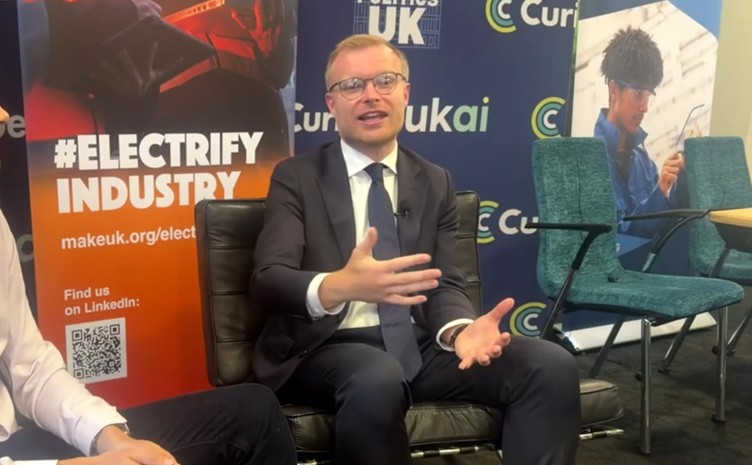
Michael Shanks MP has outlined the government’s energy strategy, including plans to decarbonise power, make bills cheaper, support solar, turbocharge the economy and mitigate cyber threats at UKAI Summit.
He has called for Britain to be at the forefront of the AI revolution, harnessing the technology to improve energy systems, reduce costs for consumers and protect against cyber-attacks.
Addressing the UKAI trade association infrastructure working group last month (July 2026) in Westminster, he said: “We need to deliver energy security here at home, but we need to bring down bills.
“And affordability is the government’s number one mission and will be even more of a focus when Andy Burnham comes to Prime Minister on Monday.”
On energy infrastructure he said: “There’s a bit of work we’ve got to do on the narrative around AI in data centres.
“I worry if we’re not careful, we could lose some of that argument with the public. We’ve got to really make the case that this is an opportunity for Britain to be at the forefront of the AI revolution, but also as an opportunity for bringing down bills and for using the system better. If we’re not careful.”
In a wide-ranging speech, Shanks also discussed the role of renewables and solar power in terms of supporting consumers tackle the cost-of-living crisis.
He also discussed making use of local energy markets, community energy and balancing energy needs locally instead of just relying on the national grid.
On cyber threats, Mr Shanks said: “The cost of resilience and the threats this country faces are growing day by day and the landscape is shifting to state actors and others who are employing AI to find vulnerabilities in our infrastructure.
“The country faces threats every day and increasingly they’re because of fairly amateur groups who utilise AI to find vulnerabilities that previously would have taken state actors years to do.”
Guest Justin Tilley, Retail Channel Lead at EcoFlow, said: “It was encouraging to hear the minister set out his vision for using technology to modernise the UK’s energy infrastructure.
“As households continue to face high energy costs, exploring the role that solar and battery storage can play in the energy mix will be critical to helping consumers take greater control of their energy use, lower their bills, and strengthen the UK’s long-term energy resilience.”
Graeme Stewart, Head of Public Sector, Check Point, added: “AI-enabled cyber attacks pose a severe threat to Britain’s critical national infrastructure, with criminals and hostile states seeking to knock-out our country’s energy infrastructure.
“A single attack could cause chaos for the government, impacting the daily lives of consumers and leaving them without core utilities and essential power supplies.
“The new Cyber Resilience Bill provides the basic framework, but it’s up to policymakers and business leaders to put these essential security measures into practice.
“We’ll already seen the damage groups like Scattered Spider can do to our transport system, so let’s not give them the chance to repeat it against our energy systems. “