


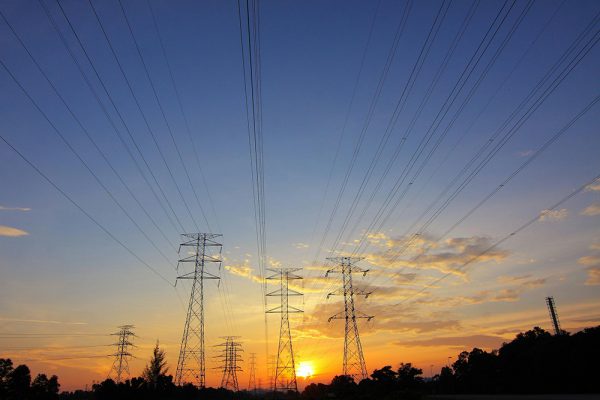
Record investment is planned for the UK’s electricity transmission network to help boost large-scale offshore wind expansion. Ben Brading, Business Energy Deals, examines the cost implications for business.
Over the past decade, the construction of wind farms has transformed Britain’s energy system. Rising from just 3% in 2010, wind farms are now the largest source of electricity on the grid, contributing over 30% of the power generated.
And this is just the beginning. The Government’s Clean Power target aims to triple offshore and double onshore wind capacity by 2030.
Renewable planning data on UK wind farms show that 637 new wind farms are either already under construction or are working their way through the planning process.
Wind farms are set to secure the UK’s energy independence and eliminate the carbon footprint of electricity, but there is a trade-off.
Over the next five years, the rise in wind generation is expected to dramatically increase the network costs associated with power transmission, which will place further pressure on already expensive electricity costs for businesses.
The rising costs of wind curtailment
A large portion of Britain’s wind capacity has been connected to the Scottish grid, where rural conditions and windy coastlines are ideal for generating electricity.
However, the capacity of the high-voltage transmission network is struggling to keep up with the growing contribution of intermittent power it produces.
On windy days, the power generated by Scotland’s wind farms can overwhelm the network’s ability to distribute electricity to demand centres in England.
To protect the national electricity grid from excess power, the grid operator, NESO, regularly instructs Scottish wind farms to disconnect from the network. In this scenario, the grid not only misses out on the renewable power it produces but must also compensate the wind farm owners for their lost revenue.
The cost of curtailing wind farms is expected to exceed £1.3bn in 2025. Curtailment costs are currently passed on to all consumers as a unit cost on electricity bills and account for approximately 3% of overall business electricity charges.
Last year, 13% of power generated by Scottish wind farms was lost through curtailment, and this wasted power will rise dramatically without urgent upgrades to the grid.
The great grid upgrade
To counter the rising cost of wind curtailment, Britain’s transmission network operators are planning significant infrastructure upgrades to increase the network capacity and enable the full utilisation of renewable generation.
Britain’s transmission network operators have each announced the following major investment plans that will construct new high-voltage lines, substations and network reinforcements over the next five years:
SSE – £22bn in northern Scotland
ScottishPower – £11bn in southern Scotland
National Grid – £19bn in England
These investments include installing the Eastern Green Links, five high-capacity 2GW undersea cables laid in the North Sea that will directly connect parts of the Scottish grid to demand centres in England.
The impact of grid upgrades on businesses
Planned grid upgrades will affect future business electricity prices through Transmission Network Use of System (TNUoS) charges, which recover the cost of developing Britain’s national grid.
Because of the planned upgrades, overall TNUoS charges are forecast to increase significantly from £5.3 billion in 2025/26 to £12.1 billion in 2030/31.
Currently, TNUoS charges make up around 10% of overall commercial electricity bills, but this figure is expected to rise significantly over the next five years.
Will wind power make electricity cheaper for businesses?
Businesses in Britain already pay some of the highest electricity prices in Europe, and the transition to a low-carbon energy system will inevitably raise transmission costs further.
However, policymakers hope this shift will help to reduce the wholesale cost of electricity, the largest component of energy bills.
The grid currently relies on gas-fired power stations to provide electricity on demand whenever generation from renewables and nuclear falls short.
This dependency effectively pegs the cost of power to the price of natural gas, which has risen significantly since the start of the conflict in Ukraine.
The continued rise of wind farms is moving the grid towards a tipping point where wind, combined with energy-storage facilities, can reliably meet demand without gas. Unpegging the market from global gas prices would ultimately make electricity prices both cheaper and less volatile for businesses.