


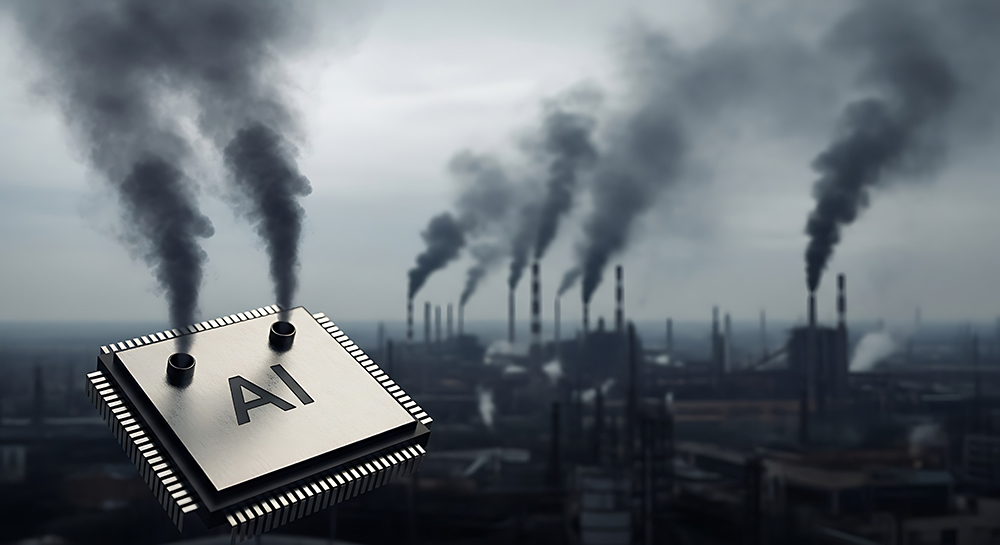
56% of IT decision-makers say their organisations struggle to measure the emissions of AI workloads accurately, according to a new study.
Well over half (56%) of UK IT decision-makers say their organisations struggle to accurately measure the emissions generated by AI workloads, creating a major barrier to understanding and proving AI’s role in meeting environmental targets.
The measurement challenge comes despite widespread confidence in AI’s role in supporting sustainability goals.
Nearly nine in ten (89%) IT decision-makers who took part in the Telehouse survey, say AI is accelerating their ability to achieve net-zero emissions and broader environmental, social, and governance (ESG) targets.
However, the lack of reliable emissions data means enterprises are unable to provide concrete evidence to validate these claims, leaving their green ambitions aspirational rather than proven.
This disconnect is reflected in how AI decisions are made. While businesses overwhelmingly believe AI is critical to achieving sustainability milestones, only 45% list sustainability as a top priority for AI-related spending, lagging well behind productivity (62%) and cost (49%) considerations.
At a strategic level, however, sustainability features prominently in long-term AI ambitions.
Nearly eight in ten (79%) IT decision-makers say AI is essential to meeting 2030 sustainability targets.
Yet, this intent does not consistently translate into operational choices, with fewer than a quarter (23%) saying that ‘renewable energy mix and efficiency’ is a key factor when choosing an AI infrastructure partner.
The research findings suggest the gap between ambition and execution has implications for how AI-critical infrastructure is planned and governed.
While 93% of IT decision-makers say geopolitical uncertainty is influencing infrastructure strategy, nearly six in ten (59%) report it would take more than an hour to switch AI inference workloads to an alternative site if a regional incident took their primary UK AI data centre offline – highlighting how operational preparedness is struggling to keep pace as AI becomes increasingly business-critical.
Mark Pestridge, Executive Vice President, Telehouse Europe, said: “AI has earned its place in sustainability strategies but belief in its potential is running ahead of evidence.
“Firms are confident in AI’s contribution to efficiency, yet far less equipped to measure or verify its environmental cost.
“Until carbon visibility improves and sustainability becomes a core criterion in spending and infrastructure decisions, the sector’s green ambitions will remain more aspiration than proof.”