


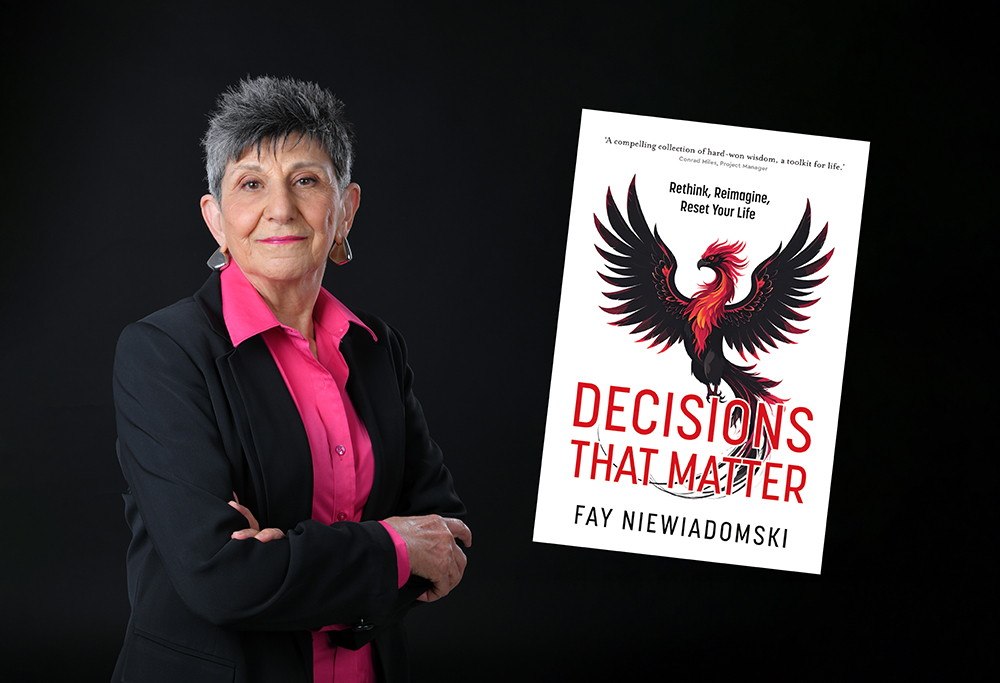
We are trying to industrialise ecosystems that are still barely understood, says strategic intervention coach Fay Niewiadomski. Industry needs to understand the true cost of a ‘quick win’ versus environmental reality.
In 1959, deep under the Greenland ice sheet, the U.S. Army Corps of Engineers constructed what looked, on paper, like a scientific centre.
Camp Century was presented as a research outpost—an audacious experiment in polar engineering.
But under the public story was a disturbing idea: Project Iceworm, a network of concealed nuclear missiles deep under the Arctic ice, aimed at the Soviet Union. It was a secret Cold War ambition driven by technological confidence.
The glacier had other plans.
Before the end of the 1960s, the tunnels warped and narrowed. Walls bent. Ceilings sagged. The glacier moved with slow, irresistible force making the missile project unviable. Abandoned infrastructure, buried waste—fuel, chemical contaminants, radioactive material—were left assuming they would remain frozen forever. Accelerating Arctic melt made that assumption false. So, what happens when yesterday’s hidden risks flow into today’s environment?
This is a case study in ethical decision-making under extreme uncertainty—the kind of decision-making that modern green business and environmental governance face routinely.
The hardest choices are made in fog: incomplete data, competing priorities, unequal power, and consequences that stretch across generations.
The Seventh Generation Principle of indigenous tribes provides a fascinating perspective on our relationship with the environment and the stories crafted to explain, sell or leverage Green Business.
I use the resurfacing history of Camp Century as an all-encompassing metaphor delineating the complex political, economic, environmental and human dangers when conflicting priorities collide with reality.
Here are six fault lines where ethical decisions fracture and force better ethical frameworks. Can we make ethical decisions when:
We don’t know what we don’t know?
There a hidden agenda and things look very attractive?
Technology and science are evolving with unpredictable consequences?
Information is fragmented and propagandised for nefarious reasons unknown to us?
We lack the knowledge and power to avert negative consequences when “Might Makes Right”?
We fail to communicate the urgency and irreversible impacts on stakeholders and powerbrokers?
1. Unpredictability: Acting Before The Fog Lifts
Camp Century’s architects understood cold, but misunderstood motion. A glacier is not static; it flows, compresses, and reshapes itself. Their models underestimated how quickly the glacier would deform the tunnels. That technical miscalculation transformed a strategic asset into a short-lived experiment.
Modern sustainability ventures face unpredictability. Deep seabed mining, for example, promises access to critical minerals for the energy transition. Yet scientists lack baseline ecological maps of ocean floors. We are being asked to industrialise ecosystems we barely understand.
Ethical discipline means restraint. Caution is not antithetical to progress; it is structured patience. Pilot-only project approvals, staged deployment rules, and environmental performance bonds put real money behind ecological promises. Scale follows evidence—not the other way around.
2. Conflicting Values: When Priorities Collide
Project Iceworm was justified as national security. Environmental risk was secondary. Similar tradeoffs—immediate strategic advantage versus ecological cost later—appear in numerous corporate decisions.
Volkswagen’s diesel emissions scandal is a familiar example. Competitive pressure overrode compliance and environmental integrity. Immediate gain resulted in regulatory penalties, reputational damage, and forced strategic change toward electrification.
When values collide, governance structure matters. Firms that embed multi-stakeholder oversight—bringing in community voices, environmental experts, and independent monitors—are less likely to let financial expediency silence ecological caution.
3. Inconclusivity: When the Science Is Murkey
The Camp Century architects believed permanent ice would entomb their waste, instead there is remobilisation. At the time, climate science did not have an undeniable case that would change behavior. Today, we know better— models improved and observation continued.
Scientific ambiguity is normal at the frontier. Ethical failure occurs when ambiguity is exploited rather than acknowledged. Fossil fuel companies distorted the knowledge environment by publicly questioning climate science long after their own research confirmed warming risks.
Better practice looks different: fund open research, publish methods, invite scrutiny. Some companies now invest in localised climate and agricultural studies before locking in supply chains, reducing both ecological and social fragility. When evidence is incomplete, transparency is a duty, not a liability.