


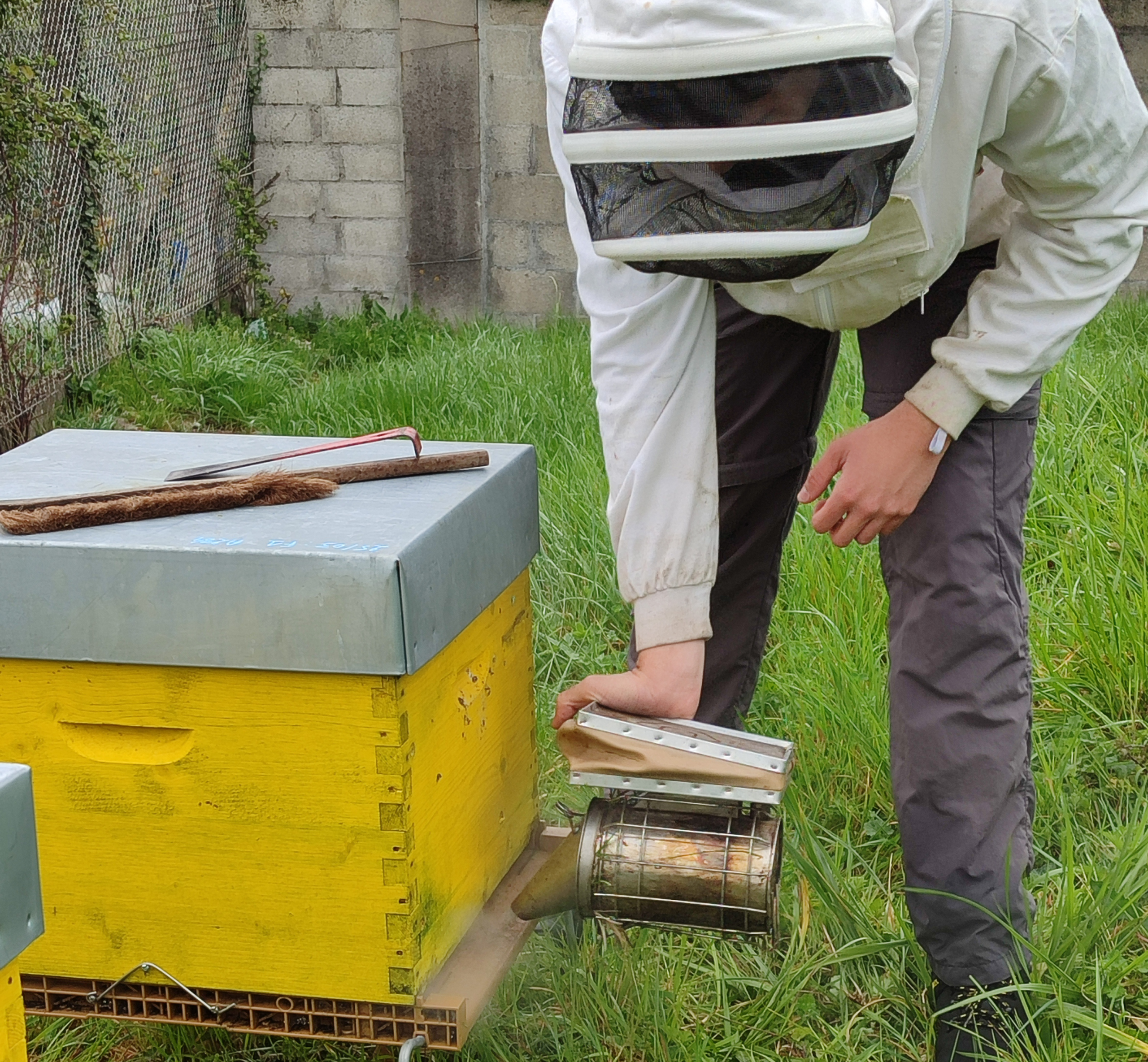
An international paper company has revealed the first results of its partnership in bee biomonitoring. DS Smith and Apilab launched the scientific partnership in 2025.
Their aim? To transform bees into environmental sentinels at 13 packaging facilities across France.
As bees provide early warning signs of changes in their ecosystem, Apilab developed a unique methodology that is AFNOR-certified and validated by the European INSIGNIA protocol.
The bees forage within a three-kilometre radius to collect millions of micro-samples each day.
They deposit the non-invasive sampling materials, including nectar and pollen captured on silicone bracelets, propolis grids and Apistrips in their hives.
These samples are analysed by experts and assessed for floral biodiversity, air quality, and pollutants.
This innovative biodiversity mapping approach measures industrial impact on local ecosystems in support of Corporate Sustainability Reporting Directive (CSRD) objectives.
The CSRD requires companies to disclose detailed environmental, social, and governance (ESG) information to enhance the transparency and accountability of their business practices.
It also supports the monitoring of ecosystems around industrial and manufacturing sites and track changes in biodiversity over time.
Positive results at a national level
Analysis across the 13 DS Smith facilities ranged from urban environments, green spaces, and rural areas. It reveals:
An average biodiversity score of 0.54, demonstrating a moderate to good level of floral diversity across sites.
An average of 25 plant families detected per site via environmental DNA, with a variation of 12 to 35 families depending on the region.
A high presence of dominant taxa such as Salicaceae (23%) and Fagaceae (22%), including willows, poplars, and chestnut trees, important nectar sources for pollinators.
“This biodiversity mapping allows us to identify the strengths and areas for improvement of each packaging site,” said Julien Clery, CSR Manager, DS Smith Packaging, France.
“It is extremely valuable to us in terms of helping to guide our actions and inform our planning decisions when we create ecological corridors, plant native species, and approach our management of a variety of differentiated green spaces,”
The DS Smith project is a key contributor to the wider international Apilab biomonitoring network that consists of over five hundred natural areas.
DS Smith has a target-led sustainability strategy, Redefining Packaging for a Changing World, which lays out its approach to a sustainable circular economy and solutions.