


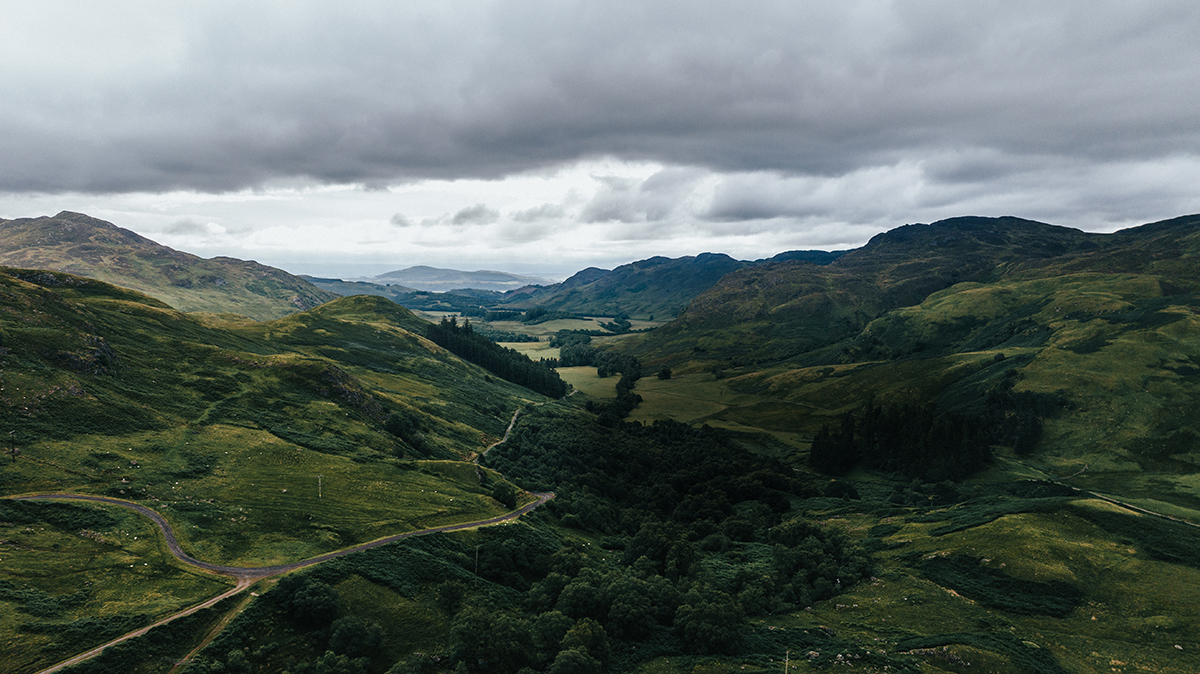
Not all trees are created equal, says Dr. Rich Stockdale, CEO, Oxygen Conservation. Plant something non-native or unsuited to the local climate and you risk creating ecological imbalance and putting existing wildlife at risk.
In recent years it feels like almost everyone is shouting “let’s just plant trees” as the answer to climate change and biodiversity loss.
I understand the appeal.
But the reality of woodland restoration is far more complicated than putting any tree in any piece of ground. Get the ecological, social and logistical detail wrong, and tree planting can deliver diminished benefits, or actively backfire.
On paper it looks simple. Trees absorb carbon, provide habitat, and make a landscape look better.
But that logic skips over the intricate dynamics at play in nature. There are plenty of examples of poorly planned planting schemes that have disrupted local biodiversity, altered how water moves through a landscape, or introduced invasive species that out-compete what was there before.
None of this happens because anyone wants to cause harm — it happens because tree planting is treated as a numbers exercise rather than the far more comprehensive job it is.
Doing it properly means thinking about species choice, the origin and provenance of your seed source, soil condition, local climate, and the biosecurity risks posed by invasive species or pathogens.
Every one of those factors shaped how we approached our Invergeldie Estate in Perthshire — a project that has just become the first UK Woodland Carbon Code scheme to receive an AA-level rating from BeZero Carbon.
Fewer than 4% of afforestation, reforestation and restoration projects it has assessed globally have ever reached that level.
That rating doesn’t come from a big planting day and a good photo. It comes from getting all the details outlined below right and being able to prove it.
Why detail matters
Not all trees are created equal. Species selection is one of the most crucial decisions in any restoration project. Plant something non-native or unsuited to the local climate and you risk creating ecological imbalance and putting existing wildlife at risk. Fast-growing non-native species can seem attractive for carbon capture, but they often fail to support the biodiversity that native woodland provides and can lower water tables or change soil chemistry in ways that hurt everything else trying to grow nearby.
At Invergeldie, we’re establishing roughly 2,500 acres of native woodland, connecting existing upland and riparian habitat across the estate.
BeZero specifically pointed to the project’s careful habitat design and low-impact planting methods as reasons behind the rating — this is the “why detail matters” principle, tested against an independent assessor, not just our own judgement.
More than just dirt
Soil condition gets overlooked constantly. Structure, microbial life and existing vegetation all play a role in whether a woodland establishes.
Compaction, poor drainage and nutrient imbalance can undo a planting scheme before it’s had a chance. Our approach is to disturb the ground as little as possible, because the plant community already there is doing useful work — holding moisture, moderating temperature, supporting the organisms a new woodland will eventually depend on.
The spread of invasive species
Biosecurity risk from imported saplings is real and growing. Diseases like ash dieback and Phytophthora root rot have wiped out huge areas of European woodland, and it should be a permanent reminder that tree planting isn’t automatically benign.
We source from certified nurseries that we visit in person ahead of time, keep detailed records of tree health and origin, and inspect stock for disease before it goes anywhere near the ground.
Partnerships make perfect
None of this works in isolation. Restoration at this scale depends on specialist ecological and land-management partners who understand a specific landscape’s needs, rather than applying a generic template everywhere.
It’s about the long term
The establishment phase, the first few years, is when trees are most vulnerable. Without proper aftercare — watering, weeding, replacing saplings that fail — the investment and effort can be lost.
At Invergeldie, that long-term commitment runs for 100 years, generating over 350,000 tonnes of carbon removals across that period. It’s also why our own monitoring platform models every one of the 1.5 million trees on that estate, tracking landscape change to centimetre-level precision.
BeZero’s assessment specifically cited our carbon accounting, permanence and additionality as standout scores. Planting the trees is only half the job.
Proving, decade after decade, that they’re still doing what you said they would is the other half, and it’s the half most projects skip.
Right tree, right place, right reasons, right time
Tree planting done thoughtfully, with a real understanding of local ecology and a commitment to long-term care, is genuinely valuable. But it isn’t a silver bullet on its own, and it never will be.
It must sit inside a broader strategy of landscape restoration alongside protecting existing habitat and restoring degraded land elsewhere. That’s why I think we need to drop “just plant trees” as a slogan and replace it with something less catchy but far more honest: plant the right trees, in the right place, for the right reasons, at the right time.
Invergeldie is the clearest proof point we have that this approach works, not just ecologically but commercially. An independent rating agency looked at how we planted, monitored and committed to that land, and put it among the highest-rated nature-based carbon projects in the world.
As voluntary carbon markets mature and buyers get more discerning about quality over volume, that’s the standard the whole sector needs to be measuring itself against.
About the author
Dr. Rich Stockdale is CEO of Oxygen Conservation, a natural capital and land restoration business managing more than 50,000 acres across Scotland, England and Wales. He is also the author of Rewilding Wealth, a transformative leader and pioneering environmentalist on a mission to Scale Conservation. Armed with a PhD in data science, he combines relentless commitment with visionary thinking to redefine our relationship with the natural world.