


Renewable power generation soared to a record third quarter high during the three months to the end of September.
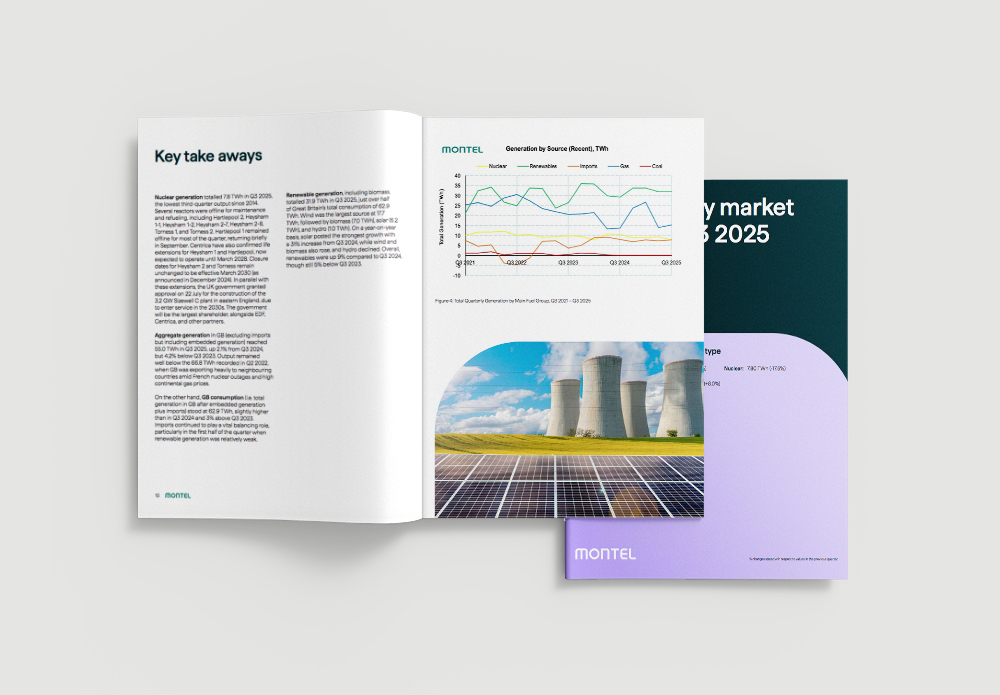
In Q3 this year, Britain’s renewable output (including biomass) rose to 31.9 TWh, the highest total observed for any Q3 period.
The increase was driven by high levels of wind and solar output.
Wind generation totalled 17.7TWh, the highest third-quarter output in records kept by Montel Analytics from 2014, and a 6% increase on Q3 2024 (16.7TWh).
This was despite frequent curtailments across the quarter, most notably in September when high winds coincided with low demand, triggering several hours of negative electricity prices.
Meanwhile, solar generation totalled 6.2 TWh, the second-highest quarterly output since Montel’s records began in 2014 (the highest having been observed in Q2 of this year) and a significant rise on the 4.7TWh recorded in Q3 2024.
Exceptional summer sunshine was responsible for the increase, with heatwaves observed in early July and mid-August boosting demand for cooling as temperatures climbed across Britain.
Higher renewable output combined with subdued demand continued to reduce the role of gas-fired generation in the GB power mix.
Although the 15.4TWh produced by CCGT-fired plants was slightly higher than the Q3 low of 13.8TWh recorded in Q3 2024, it was 25% lower than in Q3 2023 when output totalled 20.5TWh, illustrating the impact of high renewables output displacing fuelled generation from the power mix.
Meanwhile, the 7.8TWh generated from nuclear units was the lowest third-quarter output since 2014, with several reactors offline for maintenance and refuelling. These included Hartlepool 2, Heysham 1-1, Heysham 1-2, Heysham 2-7, Heysham 2-8, Torness 1 and Torness 2.
Renewables (wind, solar, hydro, biomass) accounted for 51% of Britain’s overall power mix in Q3. Gas (24%), imports (13%) and nuclear (12%) made up the rest.
Montel Analytics Phil Hewitt said: “High levels of renewable generation are symptomatic of a long-term commitment to produce more of our power from clean sources.
“Wind output would have been even higher had it not been for several curtailments across the quarter. Due to the high levels of renewable generation, the requirement for gas-fired generation was reduced.
“Q3 followed the expected seasonal trend with warmer temperatures easing system demand pressures and contributing to lower gas and electricity prices than seen in Q2.
“The stable price environment is expected to continue into Q4 barring any escalation in geopolitical tensions, particularly in the Middle East, which could push gas prices higher.
“Reports also indicate that gas storage levels across Europe are now in their final refill stages for winter.
“However, forecasts suggest the possibility of below-normal temperatures occurring during the winter months, driven by emerging La Niña conditions.
“A La Niña event typically occurs every 3–5 years and may bring a colder-than-normal winter to Britain and other parts of Europe.
“This could increase demand and accelerate storage drawdowns, adding upward pressure on wholesale electricity prices. However, this is the potential start of La Nina which may fizzle out as it appears weak now.”