

A major independent study is calling for nature to be enshrined in UK growth plans.
The South Downs National Park is the “economic powerhouse” of England’s protected landscapes, according to a new independent study.
With protected landscapes covering a quarter of England, the report says the South Downs has emerged as an economic leader, with the highest GVA of £3.84 billion and hosting around a third of all businesses across the 10 English National Parks.
Collectively, National Parks bring in almost £10bn in GVA, offering significant value to the UK’s national economy.
The South Downs National Park’s 2025 Economic Profile shows the area has experienced around 10 per cent impressive growth in productivity since the Covid pandemic – higher than the wider South East area. This mirrors a CBI study which showed that while the UK economy grew 0.4 per cent last year, the green economy grew 10 per cent over the same period.
The National Park Authority is calling for renewed support for rural economies and accelerated growth in the right areas. This includes turbocharging the green economy to fight biodiversity loss and promoting sustainability in the face of climate change.
The National Park Authority is also warning that the nation’s economy will shrink if nature isn’t integrated into growth plans.
Siôn McGeever, Chief Executive of the South Downs National Park Authority, said: “This is a really significant new study for us and shows that National Parks are even bigger players in the UK economy than many realise – and we’re growing fast.
It’s actually the manufacturing and knowledge-based technical sectors that are growing most rapidly, strongly challenging assumptions that Britain’s beautiful landscapes are purely about tourism and farming.
“This is partly fuelled by the fact that National Parks are places where people want to work and that enhance workers’ wellbeing.
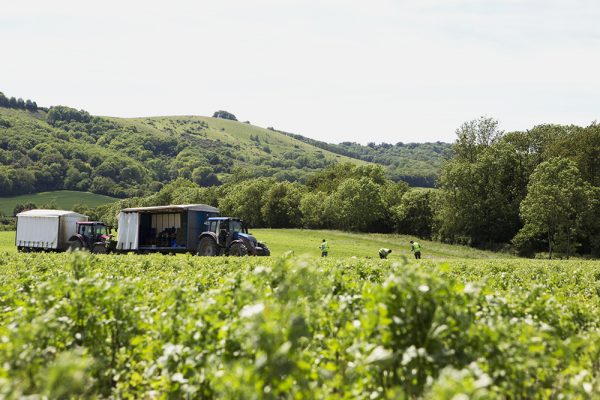
“However, farmers continue to be the lifeblood of the South Downs National Park and many other rural economies. They’re struggling, so we’d like to see greater support to help them thrive, including expanding opportunities for innovation, diversification and nature-friendly farming.
“Nature-based solutions are a rapidly growing area in the National Park, where corporations and developers can invest in creating new woodlands, grasslands and wetlands that also help fight climate change, and ultimately, it’s farmers and land managers who will deliver these.
“Without them we cannot deliver our nature targets, and we cannot grow the food we need. So, it’s really important that government policy continues to support these emerging markets.’
Siôn added: “As a stark report by the Green Finance Institute identified, the UK faces economic shrinkage – by some 4.7 per cent within this decade – if we don’t integrate nature into our growth strategy.
“Here in the South Downs and across all protected landscapes, with our incredible green and blue infrastructure and brilliant partners, we have a huge opportunity to grow a nature-positive economy over the next few years. The green economy is growing quickly, and National Parks are natural places for these booming sub-sectors, such as nature-friendly tourism, regenerative farming and climate solutions
“This new report has shown that economic wellbeing and enhancing nature can, and should, work in tandem and we’ve got a great foundation for future growth.”
Study highlights show:
Of all employment in English National Parks, 41 per cent is in the South Downs
The South Downs National Park has more than double the amount of the next biggest National Park by GVA. The GVA of the South Downs makes up almost 40 per cent of English National Parks’ total GVA.
There are almost 6,000 businesses in the South Downs National Park.
The workforce is around 61,000 people.
The National Park is the second most visited in England – with around 19.2 million visitors and over 90 per cent being day visitors. The visitor economy generates over £400m for the region.
Responsible Business is a growing trend. Since 2020, 18 businesses have become B Corp (a leading global business certification for social and environmental performance) in the South Downs, more than in any other National Park in the UK.
Manufacturing employment has grown by around 50 per cent, led by expanding sectors such as sustainable food and drink.
Land-based sectors, including farming, forestry, wine, and fishing deliver an estimated £67.9 million in direct Gross Value Added.
Over 1,200 people work in professional and scientific service sectors, reflecting the National Park’s proximity to knowledge hubs, universities and international hubs such as Gatwick Airport, Newhaven and Shoreham.
One of the biggest growth areas is landowners dedicating areas to nature restoration funded by the private sector. Over 120 acres of the Iford Estate, near Lewes – or 80 football pitches – have now been formally dedicated to nature recovery, thanks to two groundbreaking legal agreements with the National Park Authority.
Investors include King – the entertainment company behind the world-famous Candy Crush Franchise – and other businesses. Meanwhile, Halnaker Hill Farm, near Chichester, is one of the largest nature restoration projects in the UK.
Around 330 acres of land is being carefully restored to its natural condition from centuries ago, with a rich mosaic of wildlife habitats including hedgerows, grassland, ponds, woodland and wildflower meadows.
Registered with South Downs National Park Authority and Natural England, the project is one of the largest single Biodiversity Net Gain (BNG) land banks in the UK by number of BNG units available. It will provide a total of 856 units to be sold to both the mandatory and voluntary markets across the UK to help combat biodiversity loss and climate change.
The National Park Authority is currently in discussions with several landowners with a view to dedicating hundreds more hectares of land to creating new woodlands, wildflower meadows and wetlands that will be funded by businesses.
You can read the economic profile here.